|
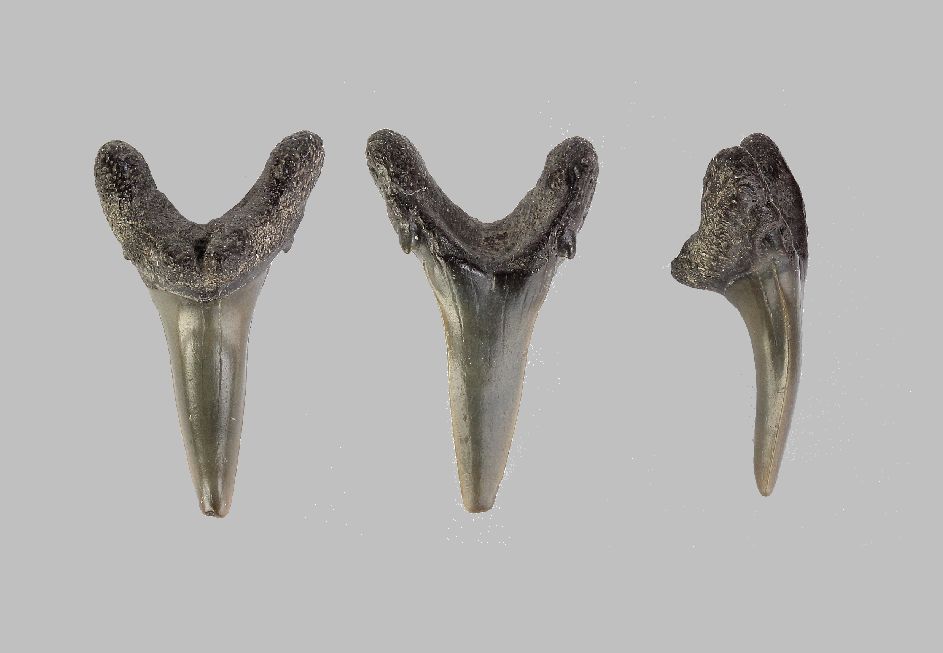
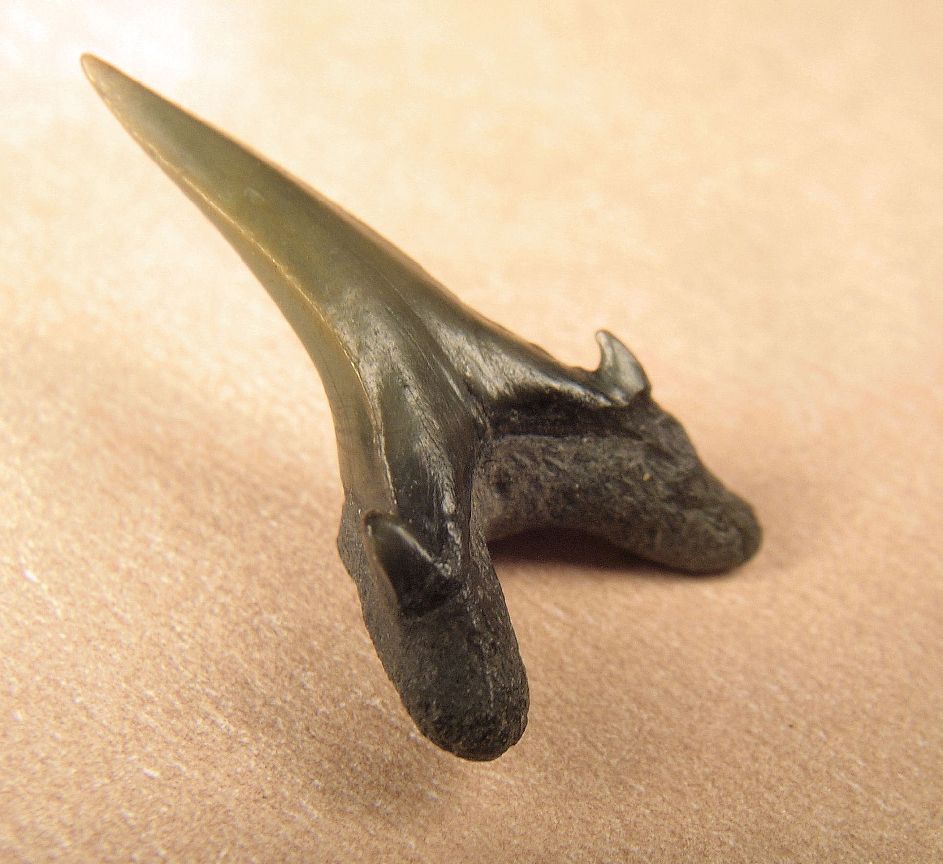
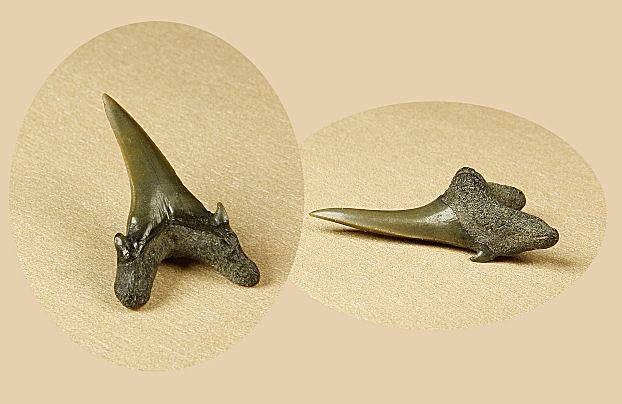
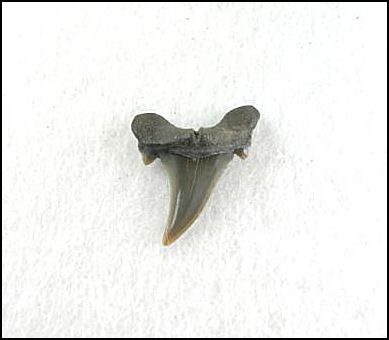
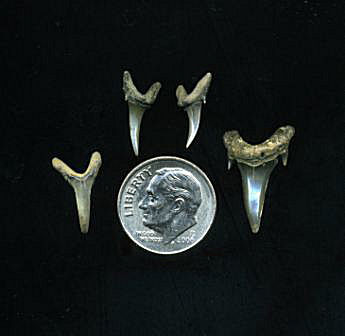
Sand Tiger Age - Cretaceous Commonality - Less common The teeth of C. samhammeri have a smooth lingual enamel surface. The crown is somewhat broad for Carcharias with a single cusplet on each shoulder. There is a strong lingual protuberance and obvious nutrient grove. Lateral teeth have inclined crowns and broad triangular cusplets. These teeth reach a maximum length of about 3/4s of an inch and and are the most common of the Cretaceous sand tigers. C. Samhammeri is a rather plain looking tooth which can easily be mistaken for a small or stream worn Scapanorhynchus texanus.
C. samhammeri plate Monmouth County, NJ
Like most sand tigers the basal margin of crown
follows the
Lateral tooth, triangular cusplets and nutrient groove.
This scan gives a good perspective on tooth size. |
|
|
|
|