|
Anomoeodus phaseolus (Hay)
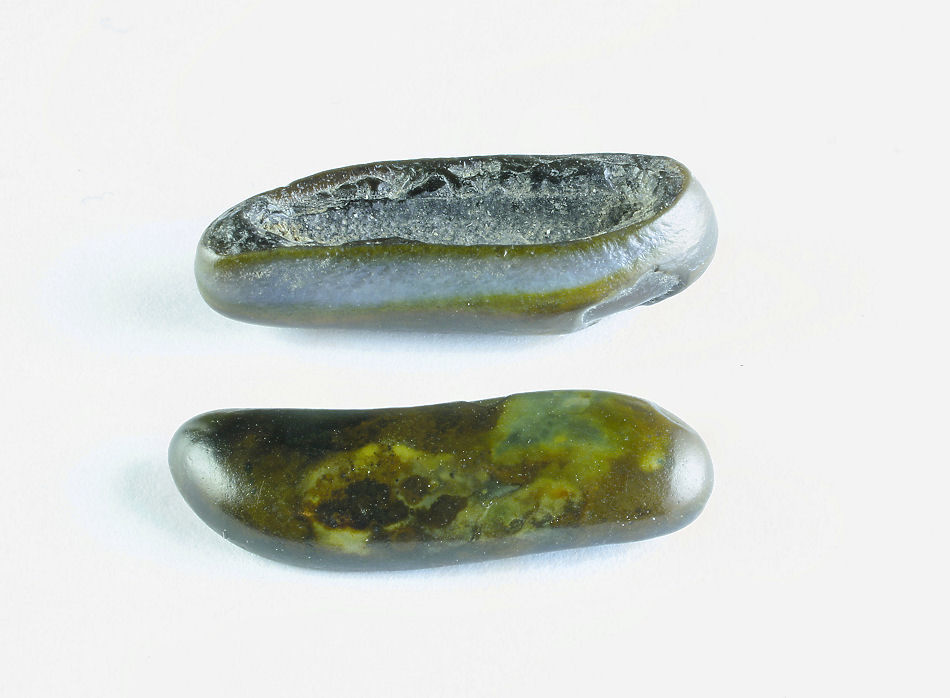
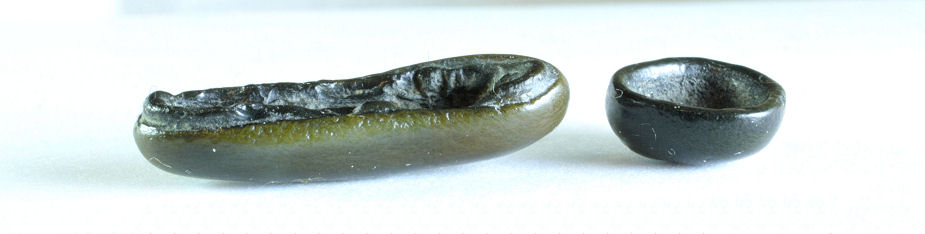
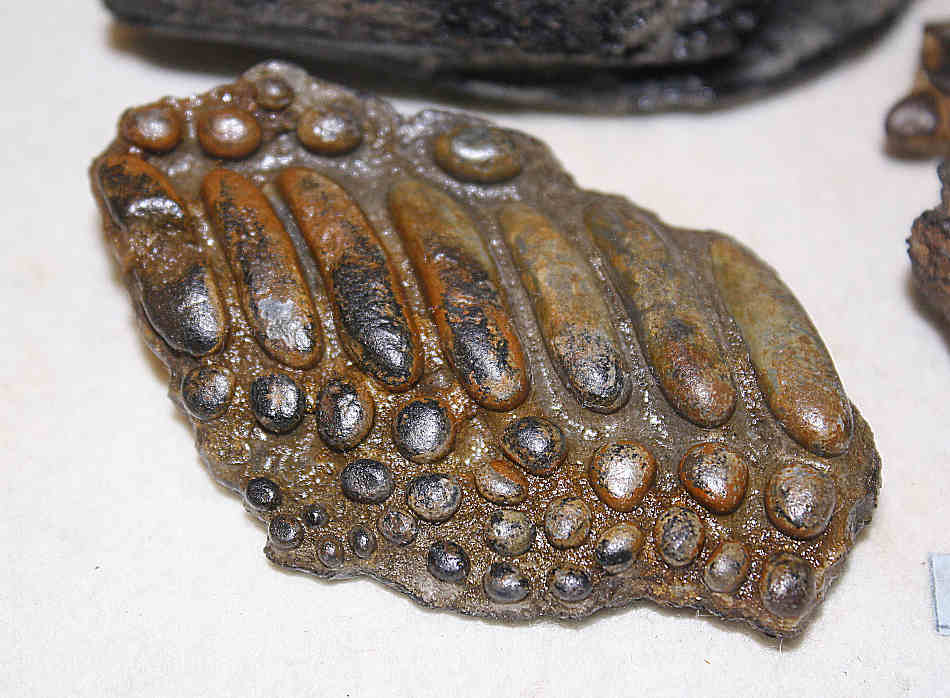
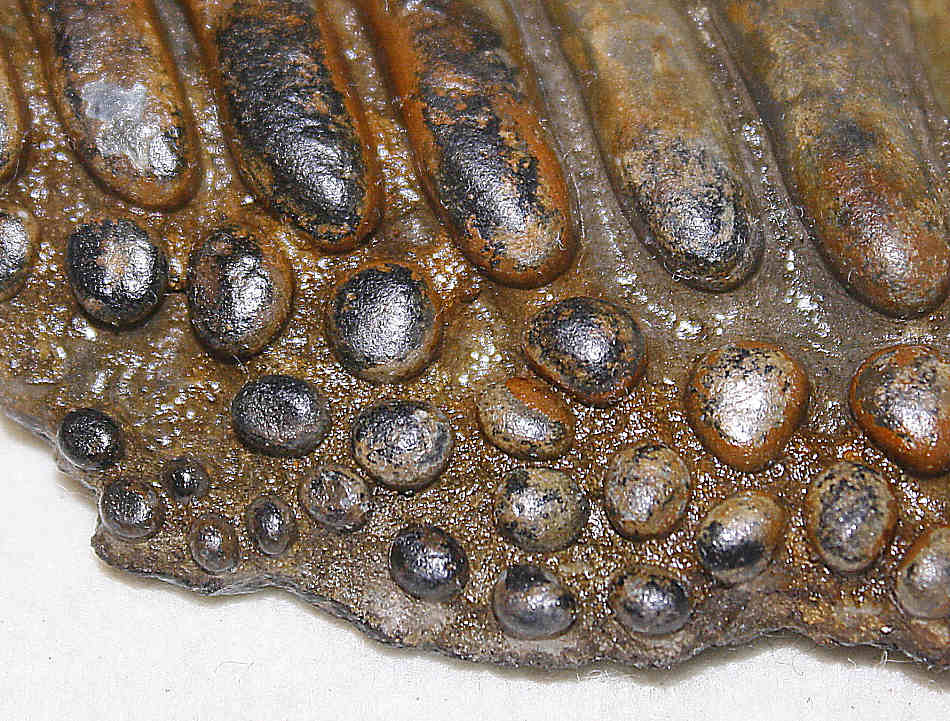
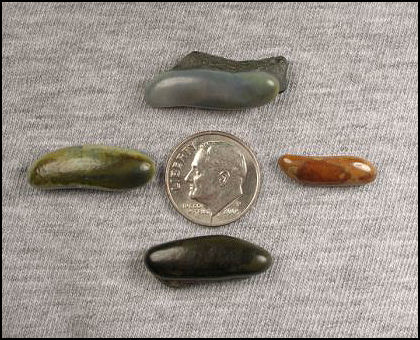
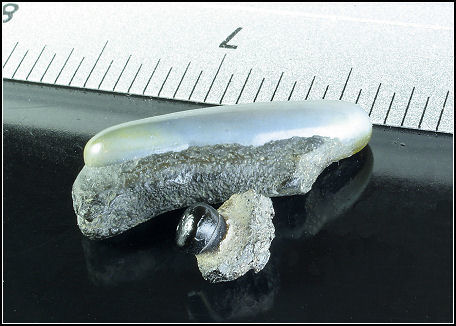
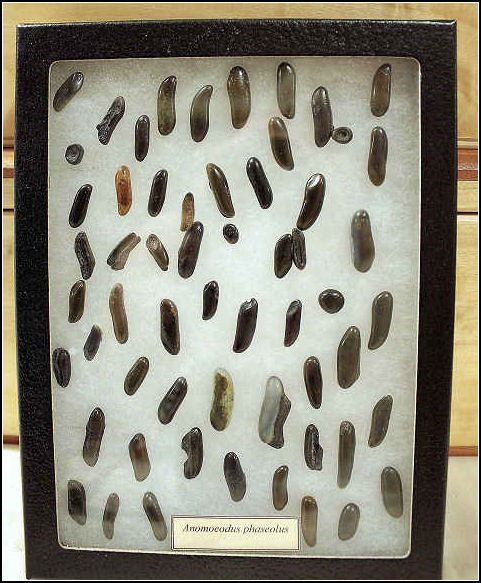
Age Cretaceous - Occurrence Very Common Anomoeodus phaseolus was a species of Pycnodontid fish known for their cobblestone-like teeth well adapted for crushing. The fossil record of this species is limited to isolated teeth and an occasional mouth plate. The teeth were replaced by new ones as they became worn helping to account for the large number found in our area. These are easy to identify, they look like beans with the backside hollowed out and are usually in the ¼ inch to 1 inch range. The lateral teeth are smaller and have a rounder shape and are found less often. A. phaseolus is sometimes erroneously referred to as a drum fish.
looking like beans with the back hollowed out. Monmouth County, NJ Scale 10mm = .394 in
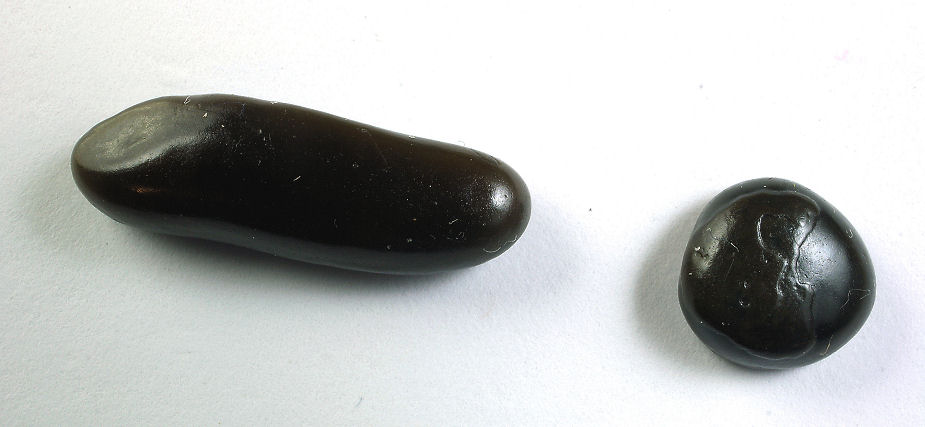
Left - medial tooth
Black is the predominate color in Monmouth
County, NJ,
|
||||||
|
|